What fat transfer to the breast actually involves
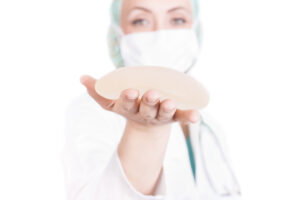
Fat transfer to the breast — also described as fat grafting, lipofilling or autologous fat transfer — uses fat taken from elsewhere on your own body to add volume to the breast.
It is worth being clear at the outset that this is two surgical procedures performed in one operation, not a minor one. Fat is first removed by liposuction from a donor area such as the abdomen, thighs, hips or flanks. It is then processed, and injected into the breast in small amounts across multiple tissue planes. Both components carry their own risks, and the operation is performed under anaesthesia.
You can read an overview of the procedure as performed at this practice on our breast enlargement using fat grafting page, and the risks associated with breast procedures generally are set out under risks of breast surgery and risks of plastic surgery.
Whether it is an appropriate option for you is assessed individually. It is not suitable for everyone, and the reasons are set out further below.
Why fat transfer is described as an “autologous” option
The term you will encounter most often is *autologous*, meaning the tissue comes from your own body. This is the substantive difference from breast augmentation using implants, where a manufactured device is placed in the breast.
What this genuinely means in practice:
- No implant device is placed, so the complications specific to implants — capsular contracture, implant rupture, implant displacement, implant-associated conditions — do not arise.
- There is no manufactured device with a finite service life sitting in the breast.
- There is no risk of reaction to a foreign material.
- Some patients report a softer feel, though this varies and depends on how much volume is transferred and your existing tissue.
What it does not mean:
- It does not mean the procedure is risk-free. Fat transfer has its own distinct complication profile, described below.
- It does not mean the result is permanent or maintenance-free. This is the point most commonly misunderstood, and it is covered in detail in the next two sections.
- It does not mean it is a smaller operation. Adding liposuction to a procedure adds surgical time and a second set of risks.
What volume change is realistically achievable
This is where expectations most often diverge from outcomes, so it is worth stating plainly.
Fat transfer produces a modest increase in volume. It is generally not comparable to what can be achieved with implants in a single procedure. The amount that can be transferred in one session is limited by two things: how much suitable donor fat you have available, and how much fat the breast tissue can accommodate while still allowing the graft to establish a blood supply.
Injecting more fat than the tissue can support does not produce a bigger result. It produces a higher rate of fat that does not survive, and a higher risk of complications such as fat necrosis and oil cysts.
For most patients considering fat transfer for cosmetic enlargement, a realistic discussion is about a modest change in volume and an improvement in upper breast fullness, rather than a substantial size increase. If a larger change is your objective, that should be discussed openly at consultation, because fat transfer may not achieve it. Our comparison of implants and fat grafting covers the trade-off in more detail.
Fat transfer is often better suited to volume restoration and contour refinement than to significant enlargement — for example after pregnancy, after weight loss, in correcting asymmetry, or in restoring some volume following implant removal.
How long results last, and the resorption question
Not all transferred fat survives. This is the single most important thing to understand about the procedure, and it is frequently glossed over.
When fat is transferred, a proportion of it does not establish a blood supply and is reabsorbed by the body over the following months. Published figures vary considerably depending on technique, patient factors and how volume is measured, but retention commonly reported in the research literature sits somewhere around half of the volume transferred, with individual studies reporting figures both higher and lower. Volume typically stabilises within around six months.
Two consequences follow, and both should be discussed with you before you consent:
The volume you see immediately after surgery is not your result. There will be swelling, and there will be subsequent loss of some of the transferred fat. A practitioner should explain what the expected settled volume is, not the immediate post-operative appearance.
More than one session may be required. Where a patient is seeking a particular volume, achieving it often takes more than one procedure. This is a normal part of how the technique works rather than a complication or a failure, but it has obvious implications for cost, time away from work, and the number of anaesthetics involved. Ask directly at consultation how many sessions a practitioner anticipates in your case, and how each would be costed.
Once fat has established a blood supply and stabilised, it behaves like other fat in your body. That has a genuine advantage — there is no device requiring eventual replacement — but it also means the result is not fixed. Breast volume may change with weight gain or loss, pregnancy, breastfeeding and ageing, as we have discussed in relation to surgery after pregnancy.
Risks and possible complications
Fat transfer does not carry implant-specific risks, but it is not a low-risk alternative. It has its own complication profile across two surgical sites.
At the breast
- Fat necrosis — where transferred fat does not survive, it may form firm areas or lumps. This may be palpable and may cause concern until investigated.
- Oil cysts — collections formed as non-viable fat breaks down. These may need to be investigated, and sometimes drained.
- Calcifications — may develop in areas of fat necrosis, with implications for breast imaging discussed in the next section.
- Asymmetry and contour irregularity — the two breasts may retain transferred fat differently, and further surgery may be considered to address this.
- Under-correction — the settled volume may be less than hoped.
- Infection, bleeding, haematoma, seroma, delayed wound healing.
- Changes in breast or nipple sensation.
At the donor site
- Contour irregularity, dimpling or asymmetry where fat has been removed.
- Seroma — one of the more commonly reported complications following the liposuction component.
- Bruising, swelling, prolonged discomfort and numbness, which may take some months to settle.
- Scarring at the small incisions used for liposuction access.
General surgical and anaesthetic risks, including reaction to anaesthesia, deep vein thrombosis and pulmonary embolism. Rarely, fat embolism has been reported in association with fat transfer procedures.
This is not a complete list. The risks relevant to you depend on your health, anatomy, the volume involved and the technique used, and should be explained to you individually.
Breast screening and imaging: an important consideration
This deserves its own section, because it is often omitted from patient information and it matters.
Fat transfer can produce changes visible on breast imaging. Fat necrosis, oil cysts and calcifications may all appear on mammography, and in some cases these findings can resemble features that require further investigation to exclude malignancy. That may mean additional imaging, and occasionally a biopsy, to clarify a benign finding.
Some context is important here, in both directions. These changes are usually distinguishable from malignancy by an experienced radiologist, and the published evidence does not suggest fat transfer meaningfully impairs breast cancer surveillance overall — some comparative studies have found fewer concerning imaging changes after fat transfer than after breast reduction. But “usually distinguishable” is not “always”, and the possibility of further investigation is real.
Practical implications:
- Tell any radiographer or radiologist that you have had fat transfer to the breast, so imaging is interpreted with that history in mind.
- Consider asking about baseline imaging before surgery, so there is a comparison available.
- Continue participating in routine breast screening according to the guidance that applies to your age and risk. Surgery does not replace screening.
- Have any new breast lump or change assessed, regardless of previous surgery. Do not assume a new lump is graft-related.
Comparing fat transfer and implants honestly
Both options have genuine advantages, and the right choice depends on what you are trying to achieve and on your individual anatomy. Neither is straightforwardly superior.
Fat transfer may suit you better if you are seeking a modest volume change, you want to avoid an implant device, you have adequate donor fat, you are also interested in contour change at the donor site, or you are restoring volume after implant removal.
Implants may suit you better if you are seeking a more substantial or more predictable volume increase, you have limited donor fat, you want the result achieved in a single procedure, or predictability of volume is a priority.
The trade-off is essentially predictability against avoiding a device. Implants deliver a more predictable volume in one operation but introduce a device that may need attention over time. Fat transfer avoids the device but delivers a less predictable volume that may require more than one procedure.
For those weighing implants, our articles on saline compared with silicone implants, implant size selection and general implant options cover the considerations in more detail. We have also written about how fat transfer is used as an approach to enlargement.
It is also worth noting that fat transfer does not lift the breast. Where breast position rather than volume is the concern, a breast lift addresses a different problem, and the two are sometimes considered together.
Suitability: who fat transfer may not suit
Suitability is assessed individually at consultation, and the following are considerations rather than fixed rules:
- Insufficient donor fat. Patients with a lower body fat percentage may not have enough suitable fat available to achieve a meaningful change. This is one of the more common reasons fat transfer is not offered.
- A substantial size increase as the objective. If the goal is a significant change in volume, fat transfer may not achieve it.
- Smoking and nicotine use. These impair blood supply and wound healing, which directly affects graft survival. A period of cessation before and after surgery is ordinarily required.
- Planned pregnancy or significant weight change. Both may alter the result. Timing is worth discussing.
- Personal or family history of breast cancer, or current breast surveillance. This does not necessarily preclude surgery, but it needs specific discussion, and appropriate imaging and specialist input may be required first.
- Expectations that cannot be met. A practitioner who tells you the procedure will not achieve what you are asking for is giving you useful information.
Is fat transfer a more “sustainable” choice?
This framing appears often in discussion of fat transfer, and it is worth unpacking, because part of it is fair and part of it is not.
What is fair. There is no manufactured device in the breast with a finite service life. Implants may need attention over time — for a complication, a device-related factor, or a change in your own preferences — and fat transfer avoids that particular cycle. If your reason for preferring fat transfer is that you would rather not have a prosthetic device in your body, that is a coherent and reasonable position, and it is the strongest argument for the procedure.
What is not fair. Two claims are commonly made that do not hold up.
The first is that fat transfer is permanent or maintenance-free. It is not. A proportion of transferred fat is reabsorbed, more than one session is often needed to reach a particular volume, and the result changes with weight, pregnancy and ageing like any other fat in the body. Avoiding an implant lifecycle is not the same as avoiding further surgery.
The second is that fat transfer is environmentally preferable. This does not survive much scrutiny. Fat transfer requires liposuction, which involves a substantial quantity of single-use surgical consumables — cannulae, tubing, collection canisters, tumescent fluid, processing equipment — typically alongside a longer operating time. Any claim that this represents a lower environmental impact than placing two implants is not supported by evidence, and it is not a sound basis on which to choose an operation.
The reasonable position is narrower and more honest: fat transfer avoids an implant device and the issues specific to implants. That is a real advantage for some patients. It is not the same thing as being permanent, low-maintenance or environmentally preferable, and any of those framings should prompt you to ask more questions.
What affects how much transferred fat survives
Graft survival is not entirely within anyone’s control, but several factors influence it, and understanding them helps explain why outcomes vary between patients and between practitioners.
Technique. How the fat is harvested, how it is processed, and how it is injected all affect survival. Fat injected in small volumes across multiple planes, so that each deposit sits close to a blood supply, tends to establish better than larger deposits. This is why the procedure takes time and why volume per session is limited.
Volume attempted. Overfilling reduces the proportion that survives and increases the risk of fat necrosis. A practitioner declining to transfer as much as you would like in one session is applying this principle rather than being conservative for its own sake.
Recipient tissue. The condition and volume of your existing breast tissue affects how much graft it can support. Previously irradiated or scarred tissue behaves differently.
Smoking and nicotine. These impair the small-vessel blood supply that grafted fat depends on, and they have a direct effect on survival.
Post-operative care. Pressure on the breasts during the early healing period can affect the graft. Following activity and garment instructions matters more here than in some other procedures.
Individual variation. Even accounting for all of the above, two patients treated identically may retain different amounts. This is why outcomes cannot be predicted precisely.
Cost
Fat transfer for purely cosmetic breast enlargement is not covered by Medicare. Some procedures performed for functional or reconstructive reasons may attract a rebate, and your general practitioner and practitioner can advise whether that may apply to you.
Ask for an itemised quote covering the surgical fee, anaesthetist, facility fee, garments and follow-up appointments. Because more than one session may be required, ask specifically how a second session would be costed, and whether that is included or charged separately. This is a material question with fat transfer in a way it is not with implants, and it is better resolved before surgery than after.
Recovery
Recovery involves two areas rather than one, and the donor site is often the more uncomfortable of the two in the early period.
You should expect swelling and bruising at both the breast and the donor area, a compression garment for the donor site, restrictions on activity for a period, and a need to avoid pressure on the breasts while the graft establishes. Time away from work varies with the extent of the procedure and the nature of your job. Final volume is not apparent for some months.
Your practitioner should give you specific written instructions rather than general advice. Guidance on recovery from other breast procedures is available in our articles on recovery after augmentation and recovery after a breast lift, though fat transfer recovery differs because of the donor site.
Fat transfer alongside implant removal
One context where fat transfer is frequently discussed is in patients choosing to have implants removed. Removing implants leaves a volume deficit, and fat transfer may be considered to restore some of that volume, either at the same time or as a subsequent procedure.
Whether this is possible in a single operation depends on tissue condition, the volume required and individual factors, and it is not always advisable to combine them. We have discussed implant removal and replacement options separately, and the implant removal page sets out how the procedure is approached at this practice.
Expectations here need particular care. Fat transfer after implant removal restores some volume; it does not reproduce the volume an implant provided.
What is required before surgery in Australia
Cosmetic surgery in Australia is subject to specific requirements, and they apply to fat transfer for cosmetic breast enlargement.
- A referral is required before attending a consultation for cosmetic surgery, ordinarily from your usual general practitioner.
- The assessment involves more than one consultation, and the first consultation with the practitioner performing the surgery must occur before you consent.
- A minimum seven-day cooling-off period applies for adults before major cosmetic surgery proceeds.
- Patients under 18 are subject to a three-month cooling-off period and a mandatory assessment by a registered mental health practitioner. This practice performs cosmetic surgery for adults aged 18 years and over only.
- Assessment includes your mental health, including screening for body dysmorphic disorder, which is a recognised contraindication to cosmetic surgery.
- You are encouraged to obtain a second opinion from an appropriately qualified practitioner.
Our patient journey page describes how the process runs here, relevant paperwork is under patient forms, and arrangements for patients travelling from out of town are set out separately. If you are weighing up practitioners, our guidance on selecting a surgeon may be useful, along with the considerations around surgery performed overseas or interstate at low cost.
Questions worth asking at consultation
- Am I a suitable candidate for fat transfer, and if not, why not?
- How much volume change is realistic for me, given my available donor fat?
- What retention do you expect in my case, and what does that mean for my settled result?
- How many sessions do you anticipate, and how is each costed?
- Which donor sites would you use, and what contour change should I expect there?
- What is your complication rate for this procedure, and how do you manage fat necrosis and oil cysts?
- What should I tell a radiographer at future mammograms?
- Should I have baseline imaging before surgery?
- What follow-up is included, and who do I contact if I find a lump?
- What are the alternatives, including not having surgery?
If a practitioner is reluctant to discuss retention rates or the possibility of a second session, that is worth weighing.
Three-dimensional imaging and expectations
Hamilton House uses Vectra 3D technology as part of consultation and planning discussions.
Imaging of this kind can help clarify a conversation about proportion and volume, and can help identify where an objective may not be achievable. It is a planning and communication tool. A simulated image is not a prediction of your surgical result, and it does not account for how much transferred fat your body will retain.
Speaking with Hamilton House
Dr Richard Hamilton, MB BS (Adelaide), FRACS, is a specialist plastic surgeon practising in Adelaide, South Australia. Procedures are performed at Hamilton House Day Surgery in Cumberland Park. You can read about his training and qualifications, the approach taken at the practice, and the practice and its facilities.
An overview of all procedures is available on our breast procedures page. If you would like to discuss whether fat transfer may be appropriate for you, speak with your general practitioner about a referral in the first instance. You are welcome to contact the practice with questions about the process.
Hamilton House performs cosmetic surgery for adults aged 18 years and over only.